.png)

Secular Homeschooling: The Complete Guide (2026)
Secular Homeschooling: Where Questions Come First
Its a modern, inquiry-based education designed to cultivate independent thought. In a secular homeschool, ideas are examined — not prescribed. Students explore multiple perspectives, evaluate evidence, and build reasoned conclusions.
The outcome isn’t just knowledge. It’s cognitive strength.
Secular homeschooling is a form of home education that does not include religious instruction and instead focuses on critical thinking, evidence-based learning, ethics, and real-world skills. Families who choose secular homeschooling often want an academically rigorous education that supports independent thought, discussion, and intellectual curiosity.
This guide explains what secular homeschooling is, how it works in practice, how families approach values and morals without religion, and how it compares to other homeschooling styles. It also addresses common questions about curriculum, socialization, structure, and long-term outcomes.
Unlike many overviews, this guide is written for families who want both freedom and structure—combining literature-rich learning, problem representation, and skills children actually use in the real world.
Go to section:
At a Glance: What Secular Homeschooling Is (and Isn’t)
-
What Is Secular Homeschooling?
-
What Secular Homeschooling Is Not
-
Why “Religion-Free” Is an Incomplete Definition
-
Who Chooses Secular Homeschooling—and Why
Secular homeschooling is not the absence of values, structure, or rigor. It is an approach to education that does not rely on religious doctrine as an organizing framework for learning. Instead, it treats knowledge, meaning, and judgment as things learners actively develop through evidence, reasoning, narrative, and reflection.
What it is:
Secular homeschooling emphasizes critical thinking, academic integrity, and transferable skills that apply across belief systems. Subjects are taught through historical, scientific, and cultural lenses, with religion appearing only as a topic of study—not as authority or truth-claim.
What it isn’t:
It is not anti-religious, relativistic, or morally empty. It does not avoid meaning or responsibility. Rather than prescribing beliefs, it builds the capacities learners need to think clearly, evaluate claims, and navigate a pluralistic world with confidence.
What Secular Homeschooling Is
Secular homeschooling is an approach to education that is grounded in evidence, reasoning, systems, and interpretation, rather than belief or doctrine.
At its core, it treats learning as an active process of making sense of the world.
That means:
-
Knowledge is evaluated through evidence and explanation, not authority.
-
Ideas are examined, compared, revised, and sometimes rejected.
-
Learners are expected to understand why something is true, not just that it is.
Secular homeschooling assumes that children will grow up in a world where:
-
people disagree
-
information conflicts
-
authority is questioned
-
answers are rarely final
So instead of protecting learners from that reality, it prepares them to operate inside it.
What Secular Homeschooling Is Not
Just as important is what secular homeschooling is not.
It is not:
-
anti-religious
-
anti-values
-
morally neutral
-
unstructured
-
academically loose
Religion may still appear—in history, literature, art, and culture—because it is part of human civilization. What changes is how it is treated.
Religion is studied as a subject, not used as an authority.
Values are discussed, examined, and practiced—not prescribed.
Structure exists, but it is built around skills, systems, and progression rather than compliance.
The Key Shift: From Belief to Capacity
The defining feature of secular homeschooling is a shift in emphasis:
From believing the right things → to developing the ability to think well.
This shows up across domains:
-
In science, learners work with evidence, models, uncertainty, and revision.
-
In humanities, they interpret texts, perspectives, and historical context.
-
In ethics and social learning, they practice reasoning through conflict, consequence, and responsibility.
-
In academics, rigor is demonstrated through understanding, transfer, and application—not memorization alone.
The goal is not to raise learners who share the same conclusions.
The goal is to raise learners who can:
-
ask strong questions
-
recognize weak explanations
-
revise their thinking when evidence changes
-
explain their reasoning clearly
-
act responsibly even when answers are unclear
How This Differs
Many people assume secular homeschooling simply recreates school without religion.
That is not quite right.
Traditional schooling—religious or secular—often prioritizes:
-
coverage over coherence
-
compliance over understanding
-
answers over explanation
Secular homeschooling, when done well, prioritizes:
-
depth over breadth
-
systems over facts
-
reasoning over recall
-
meaning-making over performance
This is why secular homeschooling can feel more demanding—not less. It places responsibility on the learner to understand, not just repeat.
Why Parents Choose Secular Homeschooling
Families are drawn to secular homeschooling for many reasons, but several patterns appear repeatedly:
-
They want strong academic rigor without ideological framing.
-
They value critical thinking, scientific reasoning, and evidence.
-
They want space for discussion rather than predetermined answers.
-
They want children prepared for pluralistic, complex environments.
-
They want learning to build internal clarity, not external dependence.
Importantly, many secular homeschooling families are not anti-religious.
They are pro-thinking: emphasizing critical thinking, examining the world through multiple perspectives, using problem representation to describe situations accurately, and relying on scientific reasoning and evidence to form and revise conclusions.
Secular homeschooling is not about removing meaning from education. It is about teaching learners how meaning is built.
Through:
-
inquiry instead of instruction alone
-
reasoning instead of rule-following
-
systems instead of isolated facts
-
responsibility instead of authority
When done intentionally, secular homeschooling produces learners who are not just knowledgeable—but capable.
Capable of thinking.
Capable of adapting.
Capable of navigating a real, complex world.
.png)
.png)
.png)
How Learners Are Taught to Think Scientifically
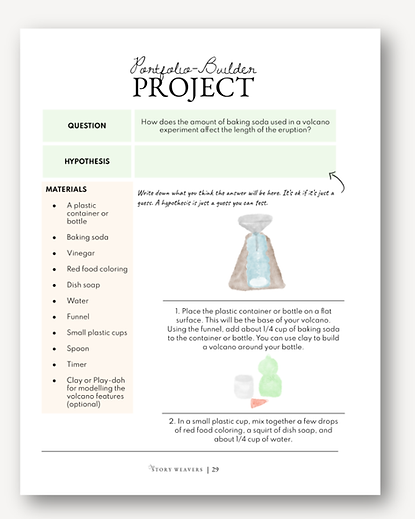
Scientific and critical thinking are not treated as isolated skills or checklists, but as ways learners interpret the world before reaching conclusions. Rather than starting with answers, learners are taught how to represent problems accurately, form and test hypotheses, distinguish claims from evidence, and revise explanations when new information appears. This approach aligns with how science actually works—building understanding through evidence, systems, and patterns—while preparing learners to reason clearly in situations where information conflicts and certainty is limited.
Across subjects, learners practice:
-
identifying relevant variables
-
distinguishing claims from evidence
-
tracing cause-and-effect
-
recognizing assumptions
-
revising conclusions when new information appears
This approach builds a shared cognitive foundation for science, humanities, and everyday reasoning. Thinking is not reduced to opinion or recall; it becomes a disciplined process learners can apply across domains.
Scientific Thinking & Critical Thinking
(How Learners Learn to Interpret the World)
When parents look for scientific or critical thinking in a curriculum, they are usually asking a very practical question:
Will my child learn real science—or just opinions dressed up as thinking?
That concern is legitimate. Scientific thinking has a real meaning, and it places real demands on how knowledge is built. This section explains what scientific thinking actually requires, how it is commonly taught, and where a secular homeschooling approach goes one step deeper.
What do we mean by “Scientific Thinking”
Across science education, cognitive science, and philosophy of science, scientific thinking is not defined by curiosity or creativity alone. It is defined by a set of necessary conditions.
At a minimum, scientific thinking involves:
-
Clear problem definition
What question is actually being investigated? -
Hypothesis formation
What explanation do we think might be true? -
Operationalization
How are variables defined so they can be observed or measured? -
Evidence gathering
What data would support or challenge the hypothesis? -
Evaluation and revision
How do results change the explanation? -
Generalization and replication
Does this hold beyond a single case?
These steps matter.
We teach them explicitly.
But they are not the whole story.
The Problem Most Curricula Don’t Address
In many educational settings, learners are taught the steps of the scientific method without being taught how those steps are generated in the first place.
As a result:
-
hypotheses are often guesses, not reasoned explanations
-
experiments test the wrong variables
-
data is collected without understanding what it represents
-
conclusions are overstated or misapplied
This is not because learners are careless.
It is because they were never taught how to represent problems accurately before attempting to solve them.
Problem Representation: The Missing First Step
At Story Weavers, scientific and critical thinking begin one step earlier than the traditional scientific method.
Before asking “What’s the hypothesis?”, learners are trained to ask:
-
What is actually happening here?
-
What conditions are present?
-
What factors might matter—and which likely don’t?
-
Is this a single cause, or part of a system?
This skill is called problem representation.
It is the ability to describe a situation accurately before explaining it.
Without it, scientific steps become mechanical.
With it, they become meaningful.
The Thinking Filters Learners Practice
Scientific and critical thinking are taught as shared ways of seeing, applied across science, humanities, and everyday reasoning.
1. From States to Conditions
Learners distinguish between surface descriptions (states) and the conditions producing them.
-
“The experiment failed” → state
-
“Which variables changed, and which stayed constant?” → condition
This prevents emotional or premature conclusions.
2. From Conditions to Systems
Learners are guided to look beyond single causes.
They ask:
-
How do these factors interact?
-
What feedback loops exist?
-
What happens if one part of the system changes?
This supports stronger experimental design and explanation.
3. From Systems to Patterns
Rather than overgeneralizing from one example, learners look for patterns across cases.
Patterns allow:
-
generalization
-
replication
-
transfer of knowledge
This is essential to scientific credibility.
4. Claims, Evidence, and Interpretation
Across subjects, learners practice separating:
-
what is being claimed
-
what evidence supports it
-
how that evidence is interpreted
They are taught to ask:
-
What would strengthen this claim?
-
What would weaken it?
-
What assumptions are embedded here?
This is core scientific reasoning—and responsible disagreement.
5. Revision as a Feature, Not a Failure
Learners are expected to revise explanations when new information appears.
Changing one’s mind is treated not as weakness, but as competence.
This aligns directly with how science actually progresses.
How This Connects Back to the Scientific Method
The traditional scientific process is not replaced here—it is strengthened.
-
Problem representation improves hypothesis quality
-
Conditions clarify variables and controls
-
Systems thinking informs experimental design
-
Pattern recognition supports generalization and replication
What learners gain is not just procedural knowledge, but epistemic stability—the ability to reason well even when problems do not look familiar.
Why This Matters Beyond Science Class
Learners will grow up in a world where:
-
information is abundant and conflicting
-
authority is questioned
-
persuasion is constant
-
certainty is rare
Without strong thinking filters, people default to:
-
ideology
-
identity-based reasoning
-
emotional certainty
-
borrowed answers
Scientific and critical thinking, as practiced here, offer another option:
clarity before conviction.
The Throughline
Scientific thinking is not just about experiments. It is about:
-
representing problems accurately
-
building explanations carefully
-
holding conclusions responsibly
When learners are trained this way, they don’t just learn science.
They learn how to think in a world where answers must be earned.
.png)
.png)
.png)
.png)
Morals, Values, and Character Without Religion
-
How Do Secular Homeschoolers Teach Morals?
-
Teaching Ethics Without Religious Doctrine
-
Moral Reasoning vs Rule Following
-
Raising Kind, Responsible, Critical Thinkers
At Story Weavers, morality is not taught as a set of prescribed beliefs or rules, but as a system of capacities children develop through practice. Students learn to reason through conflicting values, anticipate consequences, take responsibility for their choices, understand others’ perspectives, and reflect on how repeated decisions shape character. Religion is studied only as cultural or historical context, not as moral authority. On sensitive or evolving topics, the curriculum avoids prescribing conclusions and instead equips students with the thinking tools needed to evaluate evidence, compare perspectives, and engage thoughtfully. The result is not moral emptiness, but moral competence—children who can navigate complexity, justify their decisions, and act responsibly in the real world.
How Secular Homeschooling Approaches Morals, Values, and Sensitive Topics
Parents often arrive at secular homeschooling with a very specific concern:
“I’m not religious, but I still want my child to be a good person.”
Or, just as often:
“We aren’t a secular family—but we value critical thinking. How are morals actually handled?”
Morality is often treated as something children either receive or lack—as if values were a package handed down through belief. But that framing does not match real life. Outside of simple rules, moral decisions almost never come with clear instructions. They involve:
-
conflicting values
-
uncertain outcomes
-
responsibility for consequences
-
relationships with real people
In other words, morality is not a belief to adopt.
It is a set of capacities to develop.
What Morality Actually Consists Of (Day to Day at Story Weavers)
Instead of treating morals as doctrine, Story Weavers treats morality as a system of skills that students practice repeatedly—across literature, discussion, and reflection.
We will be using Level 3 examples. You can check out Level 3 full month long sample by clicking here.
1. Conflicting Values
How do I think clearly when two good values collide?
Children regularly encounter situations where no option is perfect:
-
honesty vs. protection
-
loyalty vs. fairness
-
kindness vs. belonging
How this looks day-to-day at Story Weavers
Students discuss a scenario in which a child must decide whether to show empathy toward someone who has been excluded—even though doing so may cost them social standing with a close friend.
Showing kindness may hurt one relationship.
Staying silent may harm another.
Rather than asking, “What’s the right thing to do?”, students are asked:
-
What values are in conflict here?
-
Who is affected by each choice?
-
What might happen next—short-term and long-term?
The goal is not agreement.
The goal is justification.
Students practice explaining why they would act a certain way, and what trade-offs they are willing to accept.
This is how moral reasoning is built—through conflict, not commandments.
2. Responsibility for Consequences
What happens because of what I say or do?
Morality is not framed as obedience to authority, but as ownership of impact.
How this looks day-to-day at Story Weavers
We explicitly practice giving constructive feedback—learning the difference between honesty that helps and honesty that harms.
They work with concrete examples and are asked:
-
Is this feedback specific?
-
Is it actionable?
-
Is it intended to help?
Learners examine how words can improve a situation—or damage it—even when intentions are good. In short, responsibility is discussed explicitly, not assumed.
3. Empathy and Perspective-Taking
How does this situation look from another position?
Understanding others is treated as a cognitive skill, not a personality trait.
How this looks day-to-day at Story Weavers
Story Weavers practice perspective-taking through structured activities that require them to imagine what another person might be thinking or feeling—and to explain why.
They are asked to restate an opposing viewpoint accurately before responding:
-
“What would someone who disagrees with you say?”
-
“What is the strongest version of their argument?”
This prevents caricature and builds intellectual humility.
Empathy here is not about being “nice.”
It is about understanding real people in real situations.
4. Moral Judgment Under Uncertainty
What do I do when I don’t know how this will turn out?
Moral decisions often involve uncertainty, especially in relationships.
How this looks day-to-day at Story Weavers
In literature work, we rewrite scenes where a character must decide how much to reveal, whether to be vulnerable, or how honest to be—without knowing how the relationship will change.
Exploring:
-
What risks does honesty carry?
-
What risks does withholding truth carry?
-
What responsibility remains, even when outcomes are unknown?
This helps learners understand that uncertainty does not remove responsibility.
Where Religion Fits (and Doesn’t)
Parents often ask:
“How often is religion brought up in the curriculum?”
Religion appears only in historical, cultural, or literary contexts:
-
when studying art created in religious settings
-
when examining how belief systems spread through trade or migration
-
when reading texts shaped by religious worldviews
Religion is not presented as moral authority or factual truth within academic subjects. It is studied, not transmitted.
What About Controversial or Evolving Topics?
Another common concern is:
“How do you handle topics like race, social justice, LGBTQ issues, or inequality?”
Our approach is consistent across all subjects:
-
We do not prescribe moral or political conclusions.
-
We do not present evolving social frameworks as settled facts.
-
We focus on how to think, not what to think.
Operationally, this means learners practice:
-
examining historical context
-
comparing multiple perspectives
-
evaluating claims and evidence
-
identifying assumptions
-
discussing uncertainty openly
Families bring their own values into these discussions.
The curriculum provides the thinking tools, not the verdict.
What Develops Over Time
When morality is taught as a system of thinking rather than a list of rules, a clear pattern emerges:
-
Children develop an internal moral compass rather than dependence on authority.
-
They become comfortable with complexity instead of avoiding it.
-
They learn to articulate and defend their values with clarity and evidence.
-
They act ethically even when no one is watching.
This is not moral emptiness.
It is moral competence.
Why This Matters
Children will grow into a world where:
-
beliefs differ
-
authority is questioned
-
information conflicts
-
ethical decisions are rarely simple
Secular homeschooling prepares them not by shielding them from these realities, but by training them to navigate them deliberately.
Morals are not lost without religion.
They are made durable through understanding, practice, and responsibility.
.png)
.png)
.png)
.png)
.png)
Socialization, Community, and the Real World
-
Socialization in Secular Homeschooling: What It Really Looks Like
-
Teaching Communication for the Real World
-
Preparing Children for Real-World Relationships
Secular homeschooling approaches socialization by developing internal social capacities rather than relying on shared belief systems or institutional enforcement. Because norms cannot be assumed, learners practice judgment, regulation, negotiation, and repair in real interactions where disagreement and responsibility are present. The goal is not conformity or popularity, but the ability to function well with others across differences—skills that remain stable in pluralistic, real-world environments.
Read more here:
How Secular Homeschooling Approaches Socialization
Parents usually encounter the socialization question in one of three ways:
Sometimes it’s asked gently.
Sometimes with concern.
Sometimes as a challenge.
“But… are they socialized?”
What’s striking is not the question itself — it’s how rarely anyone defines the word behind it.
The Core Problem With the Question
Socialization is often treated as a vibe or a personality trait:
-
Friendly
-
Outgoing
-
Comfortable in groups
-
Easygoing
When a child hesitates, resists, disagrees, prefers adults, avoids crowds, or struggles with group dynamics, the label appears quickly:
-
Not social enough.
-
Awkward.
-
Behind.
Again, because this is so important: When a child is quiet, intense, disagreeable, slow to warm up, or uninterested in group performance, concern appears quickly. But those traits tell us very little. They don’t tell us whether a person can:
-
handle disagreement without collapsing or escalating
-
recover after conflict
-
set or respect boundaries
-
negotiate shared goals
-
stay regulated when stakes rise
Those are the skills that determine whether someone can actually live and work with others later in life.
A Functional Definition of Socialization
At Story Weavers, socialization is understood functionally, not emotionally:
A person is socialized to the extent that they can function well with others when things are real.
“Real” means situations where:
-
disagreement exists
-
goals conflict
-
emotions are activated
-
responsibility cannot be avoided
-
outcomes affect others
Socialization is not about fitting in.
It is about function under pressure.
Btw. This definition applies to children and adults alike. It also explains why many adults—despite years of schooling—still struggle socially under pressure.
How Socialization Is Actually Built in Secular Homeschooling
Because external enforcement is limited, secular homeschooling focuses on building internal social capacities that transfer across environments.
Rather than training learners to “fit in,” the emphasis is on helping them:
-
regulate themselves without constant supervision
-
communicate clearly under friction
-
understand perspectives that differ from their own
-
take responsibility for their impact
-
repair relationships when things go wrong
These capacities are not taught as slogans.
They are developed through repeated, ordinary interactions where outcomes matter.
What Socialization Looks Like Day to Day at Story Weavers
Social-emotional learning is embedded in everyday work from K–8 rather than taught as a separate subject. Learners practice real-world skills parents and adults actively search for—conflict resolution, communication and listening skills, emotional regulation, negotiation, empathy, perspective-taking, and setting boundaries—through shared tasks and guided discussion. Over time, these patterns support healthy relationships, clear self-expression, and the ability to function well with others when situations are real.
What This Looks Like in Practice (A Few Examples)
The goal is not to list every activity, but to show how social learning is embedded.
1. Negotiation and Boundaries
Learners role-play everyday situations where they want something, are offered a compromise, and must decide whether to accept, negotiate, or walk away. The focus is on recognizing needs, tolerating discomfort, and setting boundaries without hostility.
Conversation Under Disagreement
Practice staying curious when perspectives differ—asking follow-up questions, identifying assumptions, and finding common ground before and later, during heated discussions.
Staying Curious During Disagreement
Practice discussion techniques that prioritize understanding before response.
They learn to:
-
ask “why?” repeatedly to uncover assumptions
-
explore multiple perspectives
-
stay engaged without trying to win
Through literature and discussion, learners are asked to explain what another person might be thinking or feeling—and why—without requiring them to agree. This builds perspective-taking without collapsing into relativism.
What Develops Over Time
When these patterns are practiced consistently, something subtle but important happens.
Children become able to:
-
tolerate disagreement without escalation
-
repair relationships after tension
-
state boundaries clearly
-
negotiate goals
-
recover from mistakes
-
take responsibility without shame
These shifts are easy to miss if you are watching for friendliness instead of function. But they are durable.
How This Changes the Socialization Conversation
Once socialization is defined clearly, the original question changes.
Not:
“Is my child socialized?”
But:
“Which social capacities are strengthening, and which need more practice?”
Is it the ability to handle disagreement, repair relationships, set boundaries, and work toward shared goals?
That shift removes fear and creates direction.
Want the Concrete Checklist?
If you want a precise, observable way to assess socialization — for children and adults — we created a simple functional checklist.
It replaces vague fear with clarity.
→ Read: “Is My Kid Socialized? Take the Test”
Most parents discover two things immediately:
-
Their child is stronger than they realized
-
Most adults struggle with these skills too
And that realization changes everything.
Socialization, Reframed
Socialization is not about fitting in.
It is not about popularity.
It is not about exposure.
It is about functioning well with others when things are real.
That capacity is built through deliberate patterns — practiced early, reinforced often, and carried forward for life.

.png)
.png)
.png)

Structure, Rigor, and Academic Credibility
(What Makes Learning Serious—and What Doesn’t)
One of the most persistent concerns about secular homeschooling is whether it is structured enough and academically credible.
The worry usually sounds like this:
Without religion, traditional schooling, or external enforcement—what keeps learning rigorous?
It’s an important question.
And it’s often answered poorly.
The Common Misunderstanding About Rigor
Rigor is frequently confused with:
-
volume of work
-
speed of progression
-
strict schedules
-
external pressure
-
standardized testing
These can look rigorous without producing deep understanding.
In practice, they often reward compliance rather than thinking.
True academic rigor shows up somewhere else.
What Rigor Actually Requires
Rigor is present when learners are consistently required to:
-
represent problems accurately before solving them
-
explain why an answer makes sense
-
connect ideas across contexts
-
revise their thinking when evidence changes
-
transfer understanding to new situations
This definition applies across subjects—science, literature, history, writing, and reasoning.
Rigor is not about how much content is covered.
It is about how carefully understanding is built.
How Structure Works in Secular Homeschooling
Structure does not have to come from ideology or enforcement.
In secular homeschooling, structure comes from:
-
clear learning progressions
-
intentional sequencing of skills
-
repeated cognitive demands
-
visible expectations for explanation and revision
Learning is not improvised.
It is designed.
Each level builds on the last—not just in content, but in thinking demands.
What Academic Credibility Looks Like in Practice
Academic credibility rests on three foundations:
1. Coherent Progression
Skills are introduced, practiced, revisited, and deepened over time.
Learners are not rushed through material for coverage’s sake.
They are expected to understand before moving on.
2. Cross-Disciplinary Consistency
The same reasoning standards appear everywhere.
Evidence matters in science.
Interpretation matters in literature.
Justification matters in history.
Clarity matters in writing.
This consistency trains transferable competence rather than
subject-specific tricks.
3. Accountability to Reasoning, Not Belief
Learners are held accountable for:
-
clarity of explanation
-
use of evidence
-
internal consistency
-
responsiveness to feedback
They are not rewarded for agreement.
They are rewarded for thinking well.
Why This Is Often Missed
Because this form of rigor is quieter.
It does not rely on:
-
constant testing
-
visible pressure
-
comparison between learners
Instead, it shows up in:
-
how learners explain their thinking
-
how they respond to uncertainty
-
how they revise mistakes
-
how they handle unfamiliar problems
These indicators matter more for long-term success—but they are harder to measure quickly.
How This Prepares Learners for Formal Academics
A common concern is whether secular homeschooling prepares learners for:
-
higher education
-
standardized assessments
-
professional environments
When learners are trained to:
-
read carefully
-
write clearly
-
argue from evidence
-
revise thoughtfully
-
manage complexity
they adapt well to formal requirements.
They are not dependent on one system’s rules.
They understand why systems work.
That adaptability is a form of academic strength.
In short
Structure and rigor in secular homeschooling do not come from ideology or enforcement.
They come from:
-
clear cognitive expectations
-
intentional progression
-
accountability to reasoning
-
and sustained intellectual effort
When these are present, academic credibility follows naturally.
Learning becomes serious—not because it is rigid, but because it is coherent, demanding, and honest.
Want to See How This Scales by Level?
Parents often want to know what rigor actually looks like in practice at each stage—what learners are expected to do, how thinking demands increase, and how skills build over time.
Rather than listing activities out of context, we make this progression explicit in our Skills Map, which shows how reasoning, writing, scientific thinking, and problem representation develop from level to level.
If you want to see what learners are working on at each stage—and how structure and rigor are maintained across the curriculum—you can explore that overview here.
Secular Homeschooling in the Age of AI
Artificial intelligence has changed how information is produced—but it has not changed what strong thinking requires.
Parents searching for answers around AI in education are not usually asking about technology alone. They are asking questions like:
-
Is AI bad for children’s thinking?
-
Will AI make my child lazy or dependent?
-
Should homeschoolers avoid AI altogether?
-
How can children learn to use AI responsibly without losing judgment?
These concerns are reasonable. They are about judgment, reasoning, and responsibility.
They are not really about AI. They are about what happens to thinking when answers become effortless.
What AI Changes—and What It Doesn’t
AI can generate text, explanations, summaries, and solutions instantly.
What it cannot do is decide:
-
which questions are worth asking
-
which assumptions are flawed
-
which explanations actually make sense
-
when an answer should be challenged or revised
Those are human capacities.
In AI-supported homeschooling, the limiting factor is no longer access to information. It is the ability to frame problems clearly, evaluate AI output critically, and think independently.
That is why critical thinking becomes more important—not less—when AI is introduced.
Why Secular Homeschooling Aligns Naturally With AI Literacy
Secular homeschooling does not rely on authority or doctrine to define truth.
It relies on evidence, reasoning, systems, and revision.
That approach maps directly onto what effective AI use requires.
Across the curriculum, learners practice:
-
accurate problem representation
-
hypothesis formation and testing
-
distinguishing claims from evidence
-
revising conclusions when new information appears
These are the same skills required to:
-
write effective AI prompts
-
recognize weak or misleading AI responses
-
use AI as a thinking aid rather than a shortcut
In this sense, AI critical thinking is not a new subject—it is an extension of strong thinking habits already in place.
What Parents Are Actually Worried About With AI
Most concerns around AI in homeschooling fall into three areas:
-
Cognitive dependency
Will my child rely on AI instead of learning to think? -
Erosion of understanding
Will output replace comprehension? -
Truth and reliability
How will my child evaluate what’s accurate when AI can generate anything?
Avoiding AI does not solve these problems.
Teaching critical thinking does.
Teaching Learners to Use AI Deliberately
In AI-enabled homeschooling, the key question is not whether children use AI, but how.
At Story Weavers, AI is treated as a tool that must be directed, questioned, and evaluated. Learners practice asking better questions before asking AI for answers—because prompt quality depends on clarity of thought.
This is why we created the AI Promptcraft Workbook, where learners learn to:
-
define problems precisely
-
identify assumptions and constraints
-
refine AI prompts intentionally
-
evaluate AI responses instead of accepting them automatically
The goal is not productivity.
It is thinking with responsibility.
Download the AI Promptcraft Workbook and practice asking more acurate questions.
AI can also support you as a homeschool parent. Here are seven prompts you can use.
How This Connects to the Story Weavers Mission
Story Weavers was built around a simple idea that matters even more in the AI era:
Strong thinking lasts longer than any tool.
The same foundations taught throughout the curriculum—critical thinking, scientific reasoning, problem representation, systems thinking, and revision—are exactly what allow learners to use AI without fear, dependency, or confusion.
AI can generate words.
It cannot generate wisdom.
That distinction is now practical, not philosophical.
A Clear Throughline for the AI Era
Secular homeschooling prepares learners to:
-
think clearly when answers are abundant
-
evaluate information when sources conflict
-
adapt when technology changes faster than understanding
In that sense, secular homeschooling is not reacting to AI.
It is designed for a world where thinking matters more than output.


Secular vs Religious Homeschooling (The Difference People Are Afraid to Ask)
-
Secular Homeschooling vs Christian Homeschooling: Key Differences
-
Is Secular Homeschooling Anti-Religion?
-
Can Children Learn About Religion in a Secular Homeschool?
-
How Curriculum Worldviews Shape Learning
The difference between secular and religious homeschooling is not primarily about values, morality, or care for children. It is about how truth, authority, and uncertainty are handled inside learning.
Religious homeschooling typically begins with a shared belief framework that provides meaning, moral orientation, and answers to foundational questions. Within that structure, learning often emphasizes alignment—understanding the world through a predefined lens. For many families, this offers clarity, cohesion, and a strong sense of purpose.
Secular homeschooling begins from a different assumption: that learners must be able to think, reason, and decide without relying on shared belief as a shortcut. Knowledge is approached through evidence, interpretation, systems, and revision. Authority is examined rather than assumed. Uncertainty is treated as something to work with, not avoid.
This difference can feel unsettling—not because one approach lacks values, but because secular homeschooling places more responsibility on the learner to build understanding internally. For families who want children prepared to navigate disagreement, pluralism, and changing information without ideological enforcement, that distinction matters.
Choosing a Secular Homeschool Curriculum
-
What to Look for in a Secular Homeschool Curriculum
-
Red Flags in “Neutral” Curriculum
-
Literature-Based vs Worksheet-Based Learning
-
Teaching Critical Thinking Intentionally
Choosing a secular homeschool curriculum is less about labels and more about underlying assumptions. The most important question is not “Is this secular?” but “What kind of thinking does this curriculum train?”
When evaluating options, families benefit from looking for:
-
how problems are framed before answers are given
-
whether reasoning is modeled or merely requested
-
how disagreement, uncertainty, and complexity are handled
-
whether learners are asked to explain why, not just what
A strong secular curriculum does not avoid hard questions. It provides structure for engaging them—academically, emotionally, and developmentally—while leaving room for family values and discussion.
Why parents leave faith-based homeschooling
Many families who transition to secular homeschooling do so after encountering limits in faith-based curricula—not because of faith itself, but because of how knowledge is framed.
Common reasons parents describe include:
-
discomfort with predetermined answers in academic subjects
-
concern about blurred lines between belief and evidence
-
desire for stronger critical thinking and scientific reasoning
-
need for materials that work across diverse viewpoints
For these families, secular homeschooling offers clarity rather than opposition. It separates belief from instruction, allowing learners to study the world as it is, examine ideas openly, and develop intellectual independence without requiring ideological alignment.